
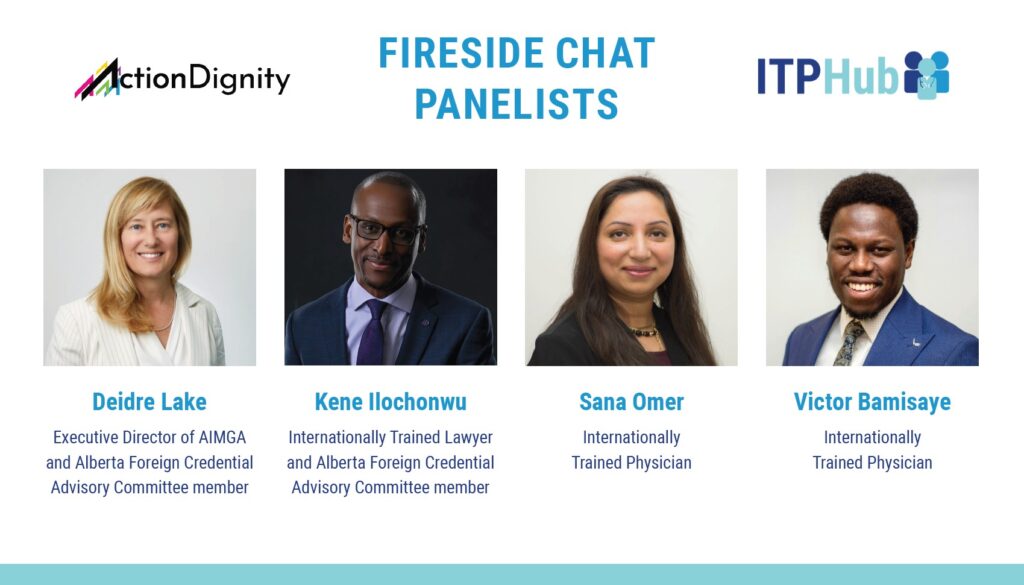
Editor’s Note: ActionDignity, in partnership with Alberta International Medical Graduate Association (AIMGA), hosted an event in recognition of the International Day for the Elimination of Racial Discrimination in March, themed “Qualified but Excluded: Dismantling Systemic Barriers in Foreign Credential Recognition and Employment”. We invited internationally trained professionals (ITPs) and Alberta Foreign Credential Advisory Committee (FCAC) members to join the conversation, bringing lived experiences and thought-provoking insights.
The conversation revealed a shared reality: exclusion is not about lack of skill—it is about how systems are designed. This blog post captures the reflections from the panellists and underscores a critical truth: addressing systemic barriers requires collective action at both policy and practice levels.
What We Heard
- Highly skilled professionals are often excluded due to systemic barriers, not a lack of competence
- Financial costs, fragmented information, and limited opportunities prolong re-entry into professions
- Policies and regulatory frameworks continue to create inequitable access
- Meaningful change requires both policy reform and collective advocacy
Starting Over—At a Cost
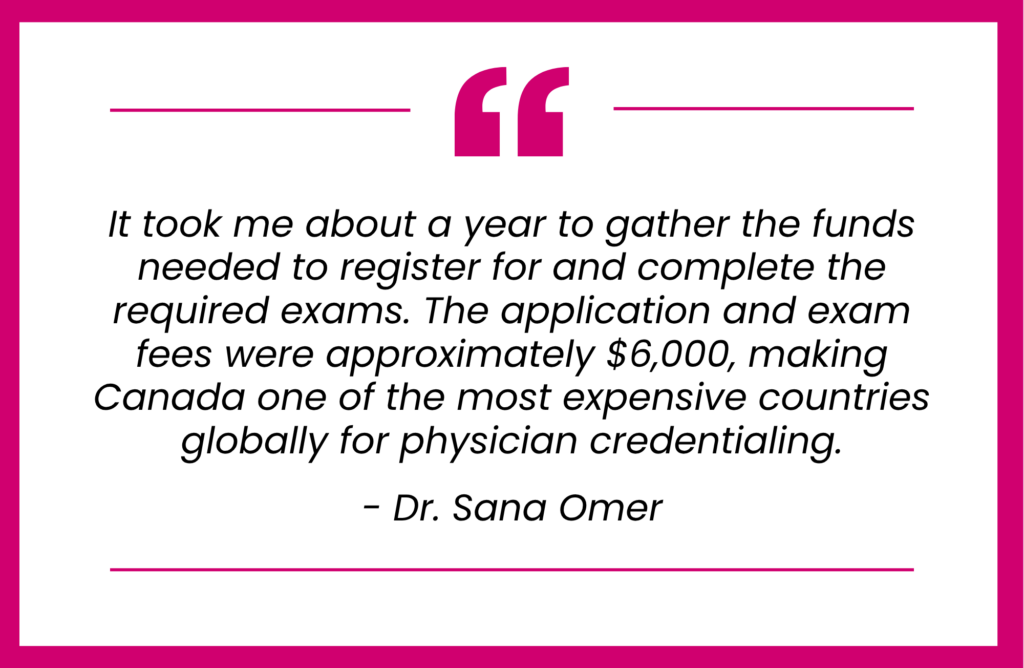
For many internationally trained professionals, arriving in Canada means more than adapting to a new country—it means restarting careers from the ground up. Panellists shared how costly and prolonged credentialing processes forced them to make decisions based on finances rather than readiness. Others spoke about the emotional toll of uncertainty, family separation, and the pressure to “start over,” despite years of training and experience.
Access to timely information and support networks proved critical. Those who were able to navigate the system more efficiently often did so because they found guidance early, highlighting inequities in access, not ability.
A System Without Clear Pathways
The journey to re-enter regulated professions is often marked by fragmented information and a lack of structured support.
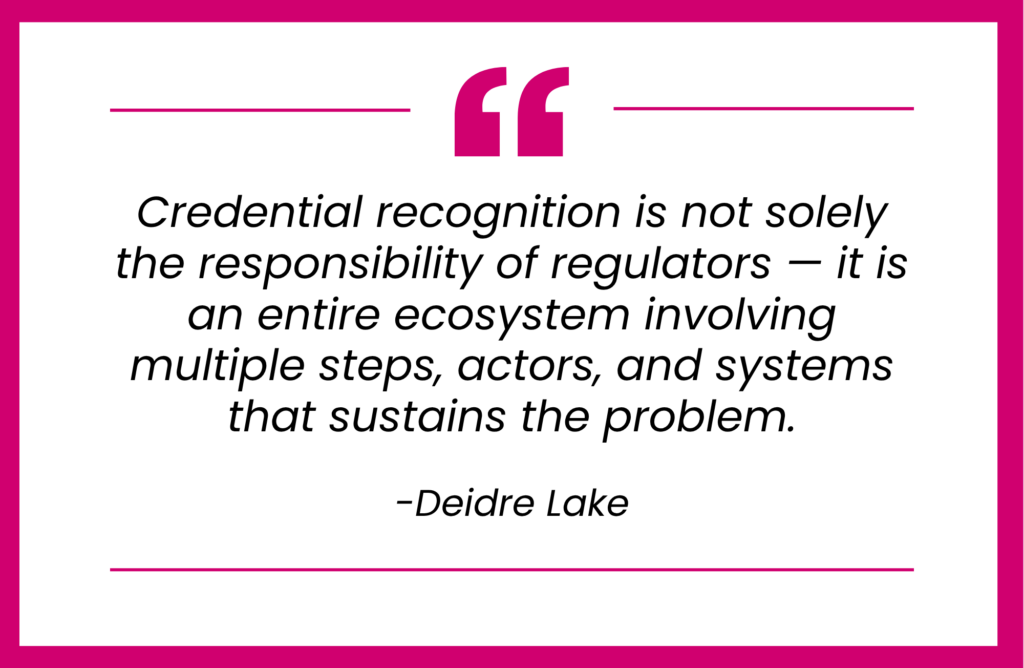
Rather than a coordinated pathway, internationally trained professionals must navigate multiple systems, requirements, and decision-makers. Sudden policy changes and inconsistent requirements across provinces add further uncertainty, making long-term planning difficult.
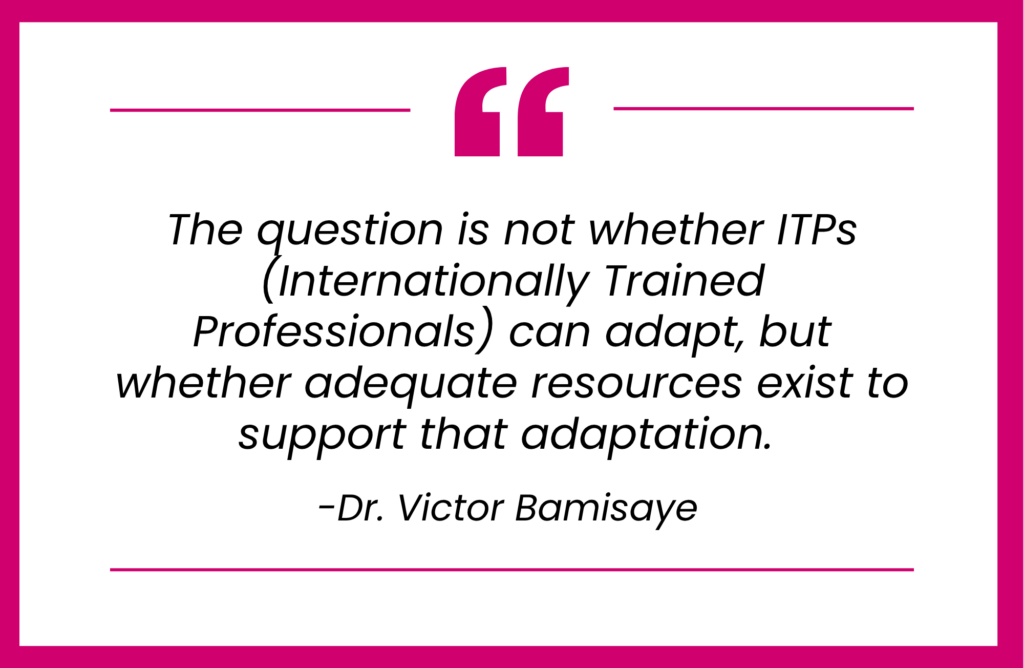
The panel emphasized that the issue is not whether individuals can adapt—but whether systems are designed to support that adaptation.
When Policy Becomes a Barrier
Panellists highlighted how policies—sometimes invisible to applicants—can limit access to employment and licensure.
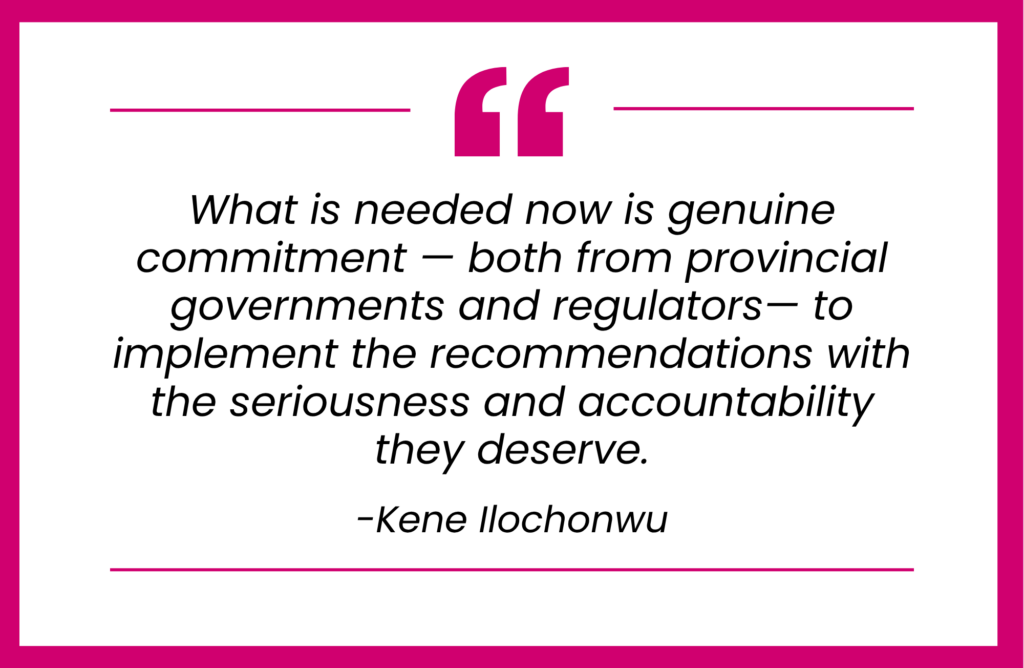
From citizenship-based hiring preferences to repetitive language testing requirements, these barriers often operate without transparency. Despite ongoing advocacy and formal recommendations from advisory bodies, progress has been slow, underscoring the gap between policy discussion and implementation.
What Needs to Change
While the challenges are significant, panellists also pointed to clear, actionable solutions:
Policy and Systems Change
- Expand access to residency and licensing opportunities by removing additional barriers, such as residency requirements
- Implement competency-based assessment models
- Introduce limited-scope licensing to better utilize existing skills and assess competency for independent licensure
Pathways to Integration
- Develop structured bridging programs for those with gaps in training and/or practice
- Increase access to mentorship, training, and increase financial support for exam preparation and meeting licensure requirements earlier in the process
- Create opportunities for professionals to gain relevant Canadian experience
Accountability and Advocacy
- Commit to implementing existing policy recommendations
- Strengthen oversight and transparency in decision-making
- Continue collective advocacy to drive systemic change
To read the full transcript of the panel discussion, click here.