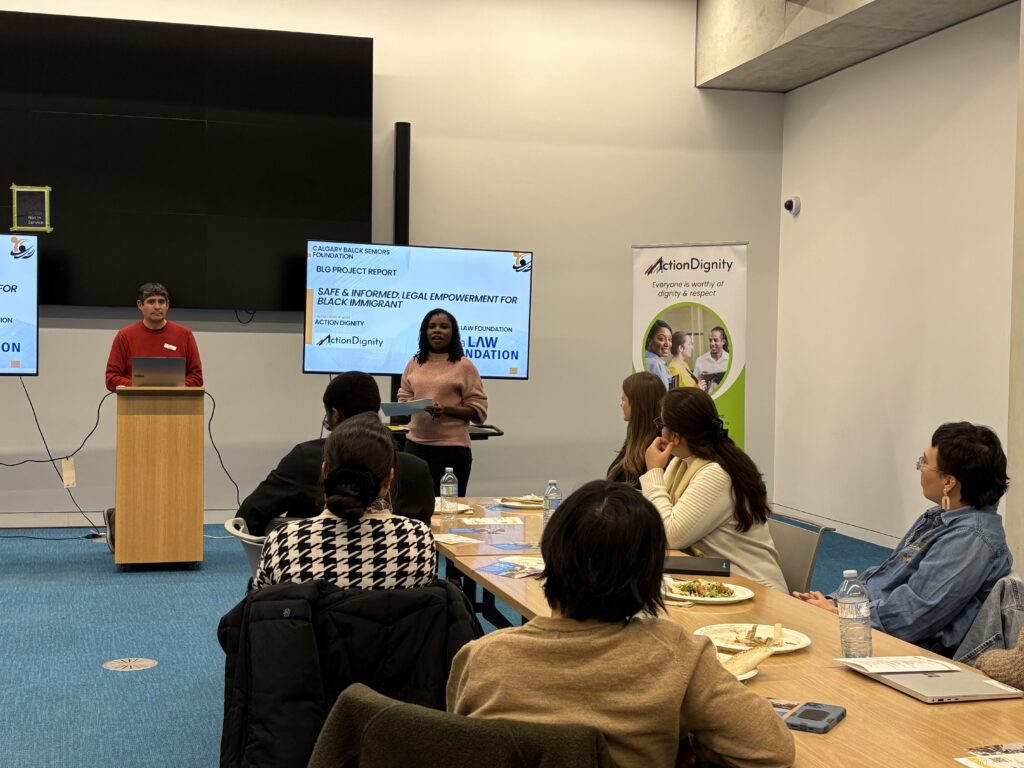
This post is created by the Bridging Legal Gaps project team at ActionDignity
“A key takeaway from my participation in the Collective Justice panel and conversation circle was realizing how deeply systemic silence shapes both personal and institutional responses to exploitation. Personally, it reminded me that rebuilding trust within vulnerable communities requires presence, empathy, and language that feels safe rather than institutional. Professionally, it strengthened my conviction that advocacy must go beyond policy or theory. Real change happens when we adapt our methods to workers’ lived realities – creating spaces where information becomes protection and community becomes prevention.”
— Collective Justice participant
BLG Phase 1: Impact at a Glance
During Phase 1, the Bridging Legal Gaps (BLG) project exceeded its original targets and demonstrated strong, measurable impact in improving access to legal information, navigation supports, and workers’ rights awareness among racialized and newcomer communities across Alberta.
Beyond meeting deliverables, BLG helped catalyze community leadership, early intervention, improved access to legal information, and equity-focused systems change. Community-led Action Plans (CAPs) played a critical role by strengthening pathways for workers experiencing exploitation or discrimination—often before harm escalated.
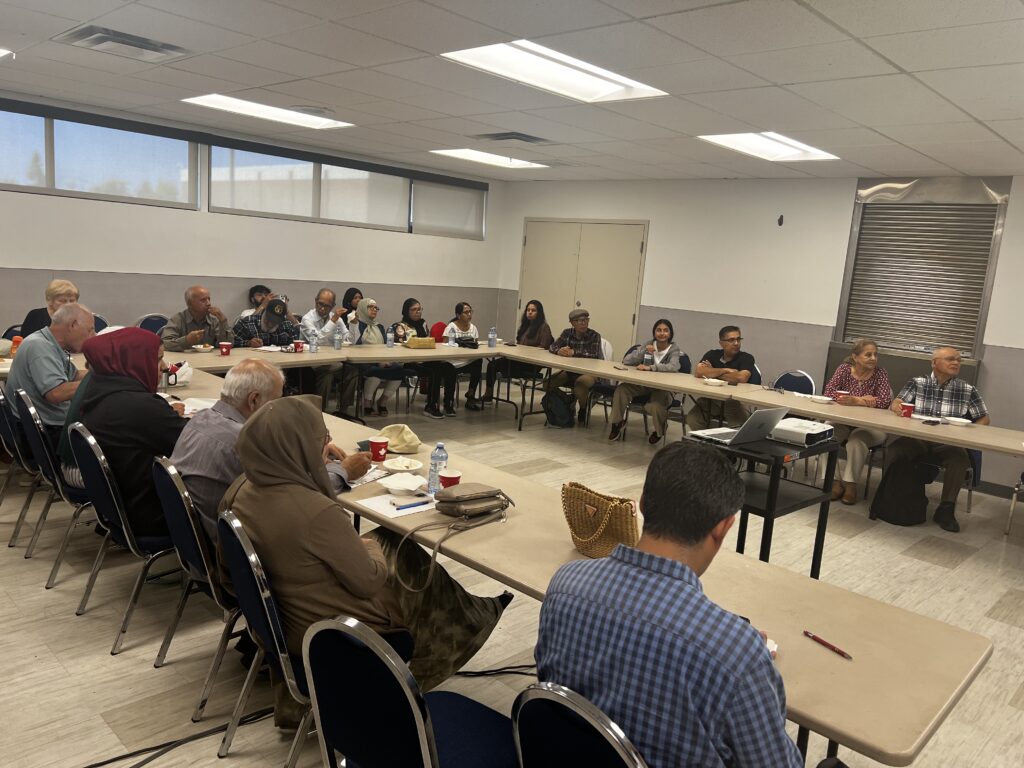
Targets Surpassed, Reach Expanded
The results below reflect both strong community uptake and growing demand for accessible, culturally relevant legal information:
- Over 1,500 workers reached with legal information (exceeding the initial target of 720)
- 80 Natural Supports trained, surpassing expectations for community-based legal capacity building
- CAP reach doubled, expanding from 500 to more than 1,000 racialized and immigrant workers
- Increased collection of worker stories and lived experiences through CAP activities and Community Conversation Circles, strengthening BLG’s evidence base
Strengthening Community Capacity and Evidence for Change
A defining strength of BLG Phase 1 was its commitment to listening to lived experience. Through Community Conversation Circles embedded in workshops and trainings, participants shared real-life experiences of wage theft, discrimination, job insecurity, human trafficking, and workplace exploitation—particularly among immigrants and temporary foreign workers.
These conversations directly informed the development of the Legal Gaps Mapping Tool, ensuring BLG’s work remains grounded in community realities while supporting evidence-informed planning and future policy advocacy.
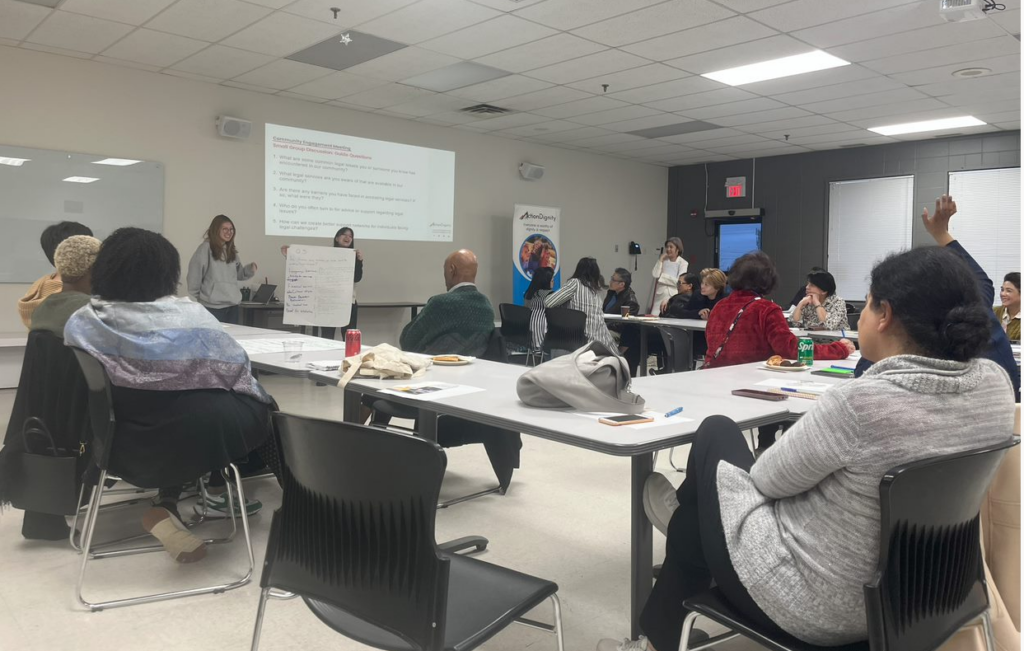
Natural Supports: A Sustainable Community Resource
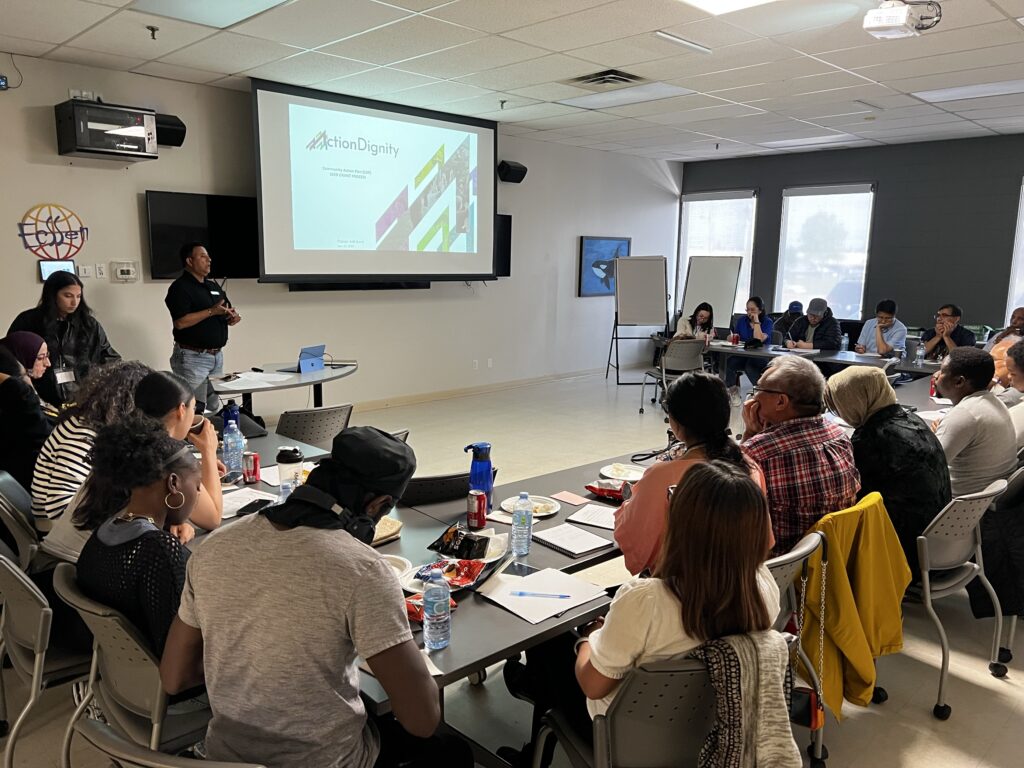
BLG reached a major capacity-building milestone through its Natural Supports Training, attended by 80 participants from more than 25 member organizations.
These trained Natural Supports now serve as trusted, culturally and linguistically responsive guides within their communities. They help peers recognize early warning signs of exploitation, navigate complex legal systems, and seek support before issues escalate—creating a sustainable, community-rooted approach to access to justice.
Strengthened Collaboration and Partnership
The project’s impact was further amplified through strong cross-sector collaboration. Partnerships with Pro Bono Students Canada supported the development of accessible workers’ rights materials. Collaboration with UFCW Local 401 expanded workplace outreach, while guidance from the Alberta Human Rights Commission strengthened accuracy and relevance. Legal professionals, community advocates, and policy partners contributed as facilitators—ensuring BLG’s information was accurate, trusted, and actionable.
More Than Numbers: Rebuilding Trust and Access
The success of Phase 1 goes beyond metrics. Through BLG, we have begun repairing broken bridges between legal systems and communities that have historically been pushed to the margins. These bridges reduce—and in many cases remove—barriers to accessing legal information, allowing the law to function as a tool for protection rather than fear.
The Road Ahead: BLG in 2026
Building on the momentum of Phase 1, Bridging Legal Gaps is entering its next phase with a renewed focus on deepening community leadership and expanding impact.
In 2026, BLG will:
- Launch a new round of Community-led Action Plans (CAPs) to support grassroots legal empowerment
- Deliver Natural Supports Training in more communities to strengthen trusted local networks
- Bring legal information workshops directly into workplaces, particularly in high-risk sectors
- Host two public education seminars focused on collective action and access to justice
Through its outreach to racialized workers, BLG will also continue policy advocacy focused on foreign credential recognition and the removal of the Canadian experience requirement, centring community voices in systems-level change.
Call to Action
As we move forward, we invite community organizations, workers, service providers, partners, and allies to be part of the next chapter of Bridging Legal Gaps.
Whether by applying for a Community Action Plan, participating in trainings, hosting a workplace workshop, or amplifying community voices through advocacy—your engagement matters.
Together, we can continue transforming knowledge into confidence, confidence into action, and action into lasting change.